Trump, Putin, and Xi to Meet in Shenzhen With Conflicting Goals
Leaders arrive in southern China Thursday for a trilateral summit where nuclear stockpiles, the war in Ukraine, and diplomatic image collide.
By Liam O'Connor ·
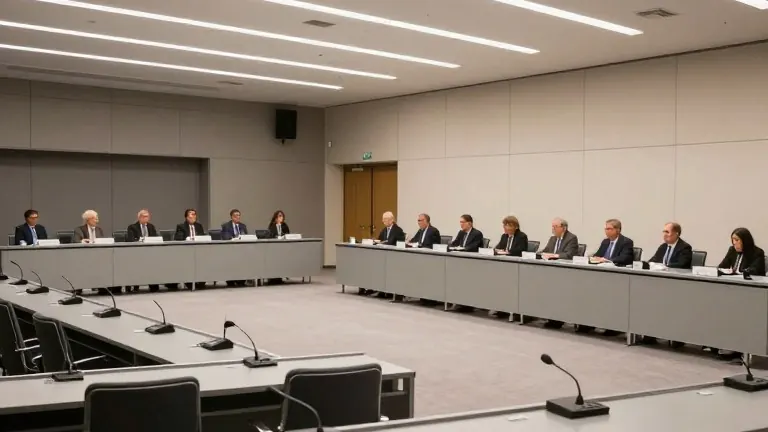
President Donald Trump, Vladimir Putin, and Xi Jinping will convene in Shenzhen, China, on Thursday for a trilateral summit that brings together the leaders of the world’s three largest nuclear powers. The gathering marks a departure from recent diplomatic norms, as the three men arrive with distinct and often competing objectives for the agenda.
Trump intends to use the session to push for nuclear nonproliferation, urging his counterparts to reduce the massive stockpiles held by Washington and Moscow. However, U.S. officials admitted they do not expect a formal arms control agreement to emerge from the talks. One senior administration official described the meeting as an entry point for a potentially productive conversation rather than a final destination.
Beijing’s position is driven by its own strategic calculations. Chinese officials stated that the country is actively expanding its nuclear capacity, a policy they consider non-negotiable. This buildup is a response to the U.S. arsenal, which is nearly ten times larger than China’s. With an estimated 620 warheads compared to over 5,000 for the U.S. and Russia, China is developing new warheads and sophisticated delivery systems to close the gap.
Putin seeks a forum to discuss the ongoing war in Ukraine, a topic Trump has signaled he does not intend to prioritize at the table. A U.S. official noted that China is not a direct participant in the Ukraine track, making the inclusion of that topic less appropriate for this specific meeting. Ukraine has expressed concern over the Trump administration’s pressure campaigns to force concessions, particularly as U.S. policy traditionally avoids negotiating about the conflict without Kyiv’s direct involvement.
Xi Jinping views the summit primarily as a stage to project China’s role as a global peacemaker. By hosting the meeting, Beijing aims to demonstrate its ability to broker stability among historic rivals. This aligns with a careful diplomatic balance where China respects sovereign borders while providing Moscow with economic and technological support throughout the war.
Elon Musk is the only confirmed American business leader accompanying Trump on the trip. Musk’s presence follows his company’s decision last month to restrict Ukraine’s battlefield access to Starlink, his satellite internet service. The summit occurs shortly after this month’s midterm elections delivered a sharp electoral rebuke to the Trump administration, rivaling the backlash against President Nixon during the Watergate era.
The meeting is expected to produce high-profile imagery reminiscent of the 1945 Yalta conference, where world leaders shaped the postwar order. For Putin, the event offers a chance to present Russia as a major global player despite four years of economic and military strain. For Trump, it serves as a platform to reassert his international influence following recent domestic political challenges.