Trump Holds Firm on Iran Stalemate as War Enters Ninth Month
With elections lost and allies shifting, the U.S. president opts for economic pressure over new strikes, leaving the Strait of Hormuz blockade and regional conflicts to intensify.
By Jack Thompson ·
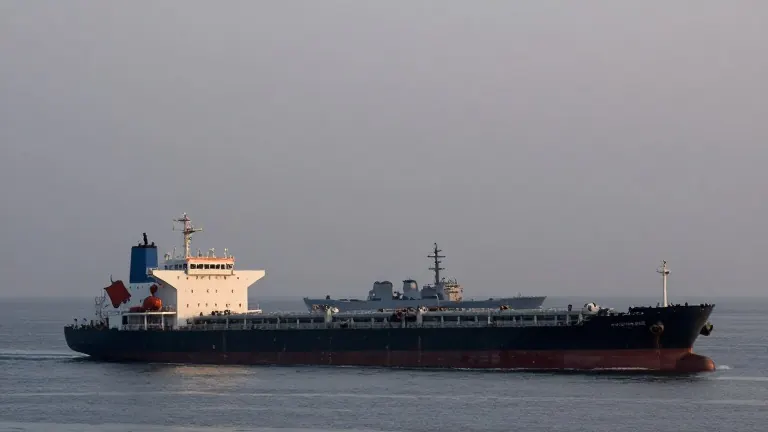
President Donald Trump is maintaining a strategy of sustained economic pressure on Iran rather than seeking a negotiated end to the nine-month war. The approach keeps the Strait of Hormuz partially closed and allows the conflict in Yemen to expand, while the U.S. Navy enforces a blockade that has cut off billions in Iranian oil revenue.
The shift follows a series of political setbacks. Trump supported Israeli Prime Minister Benjamin Netanyahu, who now faces the prospect of being ousted after recent elections in Israel. At home, the Republican Party lost its majority in Congress during the midterm elections. Vice President J.D. Vance attributed the party's losses to the unpopularity of the war with Iran and the state of U.S. relations with Israel.
Trump met with Qatari Prime Minister at the White House this week. The meeting occurred as Qatar mediates between the two sides. Trump stated that Gulf Arab allies prefer the status quo of continued pressure. He wrote on Truth Social that an immediate attack seems unlikely while the U.S. remains locked and loaded, a departure from his earlier threats of quick, intense strikes.
The status quo involves persistent friction in the Strait of Hormuz. Iranian authorities require permission for ships to transit the waterway, a rule that did not exist before the war. The U.S. assists oil tankers using a route near the Oman coastline. This arrangement helps Arab states export oil but does not restore pre-war production levels for liquefied natural gas, fertilizer, or aluminum. It also prevents Kuwait, Qatar, and Bahrain from importing goods to their ports.
The International Monetary Fund reports that Gulf Arab states are in economic recession. Kuwait, Qatar, and Iraq economies are contracting by approximately 16 percent this year, while Bahrain's economy is down 11 percent. Secretary of State Marco Rubio said economic sanctions are achieving their goal without further military action. He noted that Iran must eventually pay its security forces and feed its population.
Military activity continues despite the diplomatic stalemate. The U.S. is deploying a third aircraft carrier with thousands of troops to the region. Iran unveiled a new underground missile production site this week. On Friday, Iranian media reported that the U.S. struck an island in the Strait of Hormuz containing radars and drone launch sites. Iran's Revolutionary Guard responded by targeting a U.S. early warning radar in Bahrain.
Economic isolation deepens as the U.S. naval blockade bars Iranian ships from transporting oil to countries like China. The U.S. military says the blockade has removed at least $25 billion in revenue from Iran. The United Arab Emirates severed all economic and trade ties with Iran over the summer. The UAE had been a major trade partner, and local bank accounts were allegedly used by Iran's supreme leader and Revolutionary Guard to move money. A new U.S. operation called Iron Gate aims to stop Iran from moving advanced weapons across land routes and the Caspian Sea.
The war has intensified in Yemen, where Saudi Arabia and the Houthis are engaged in all-out conflict. The Houthis, supported by Iran, said Saudi airstrikes killed nearly 60 people in a village near Sana'a over the weekend. Saudi Arabia faces daily missile and drone attacks, including strikes on its key East-West pipeline and the headquarters of oil company Aramco in Riyadh. Pakistan, Turkey, and Egypt are providing defensive support to Saudi Arabia, while the U.S. assists with intelligence. The United Nations says 330,000 Yemenis have been displaced by the renewed fighting.
Diplomatic efforts remain gridlocked. Iran says it is prepared for a short-term pause on ship attacks but insists on seven demands before direct talks. These include lifting sanctions, ending the naval blockade, and unfreezing Iranian dollars. Hamidreza Gholamzade, the Tehran municipality spokesperson, told NPR that the message is take it or leave it. Rubio has described the conditions as absurd. Mohsen Rezaei, head of Iran's Supreme National Security Council, said Wednesday that Iran will not remove even a shred of enriched nuclear material from the country.