Otago professor says chicken safety regulator is failing
Michael Baker argues the government should require labels on contaminated meat rather than relying on consumers to avoid washing raw chicken.
By Mariana Flores ·
Michael Baker, a professor of public health at the University of Otago, criticized New Zealand’s food safety regulator for poor performance in protecting consumers from contaminated fresh chicken. Baker, speaking through a recent press release, described the performance of the Ministry for Primary Industries’ food safety unit, New Zealand Food Safety, as very poor. He argued that the country’s failure to eliminate campylobacter infection from raw chicken constitutes a regulatory failure.
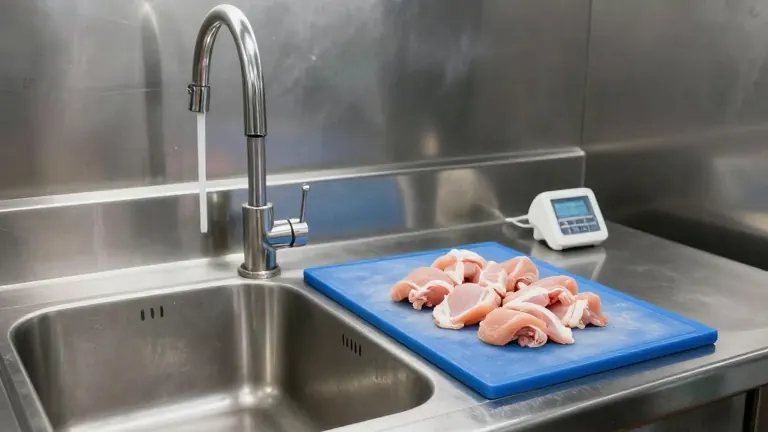
New Zealand Food Safety recently announced a goal to lower the campylobacter infection rate by 15 percent, from 76 to 65 cases per 100,000 people, by 2030. The agency also launched a campaign advising the public not to wash uncooked chicken. Vincent Arbuckle, the deputy director-general of New Zealand Food Safety, explained that rinsing raw chicken spreads bacteria like campylobacter to sinks and utensils through water droplets. Baker countered that the responsibility should not fall solely on the public. He asked if telling consumers not to wash their chicken was the regulator's only response, noting that the agency had to do better.
Baker proposed that the regulator require poultry producers to label how heavily contaminated their products are. This would allow consumers to choose meat with lower or no contamination, creating market incentives for better production. A 2018 study co-authored by Baker found that consumers had major gaps in their knowledge about safe chicken preparation. He stated that having a labeling requirement is reasonable, similar to rules for other hazardous goods. Baker noted that contaminated fresh chicken causes an estimated 77 percent of human campylobacter infections, leading to over 500 hospitalizations and tens of thousands of community illnesses annually.
A 2025 analysis by the Public Health Communication Centre, led by Baker, showed that hospitalization rates for campylobacter infection increased by almost 70 percent over 17 years. Baker argued that the former New Zealand Food Safety Authority was very successful when it halved the rate of human disease in three months in 2010. He said that since then, infection rates have remained high by world standards and may be increasing. In contrast, Arbuckle said reported rates of foodborne campylobacter infections halved between 2006 and 2020 and dropped by another 20 percent since then. He suggested that changes in how people access healthcare might explain rising hospitalizations even as case rates drop.
Arbuckle said New Zealand Food Safety is not convinced labels are necessary because a 2023 survey indicated high consumer awareness of raw chicken risks. He noted that most other countries do not require such labeling and that the costs of implementation are currently unknown. The agency has worked with supermarkets to display the do-not-wash message during the summer spike in cases. Arbuckle also highlighted industry changes, including new processing equipment and antimicrobial washes, which reduced campylobacter detection on chicken carcasses from 52 percent of samples in 2006 to 10.2 percent in 2024. Baker believes the regulator is missing the mark, stating that the problem can be ended rapidly if the agency focuses on reducing contamination at the source.