Iran says it targeted a US radar in Bahrain, the second such claim in three days
Sirens sounded across Bahrain as the Revolutionary Guard claimed a drone strike on Riffa Air Base, while diplomacy to end the wider war remained stalled.
By News Media House Staff ·
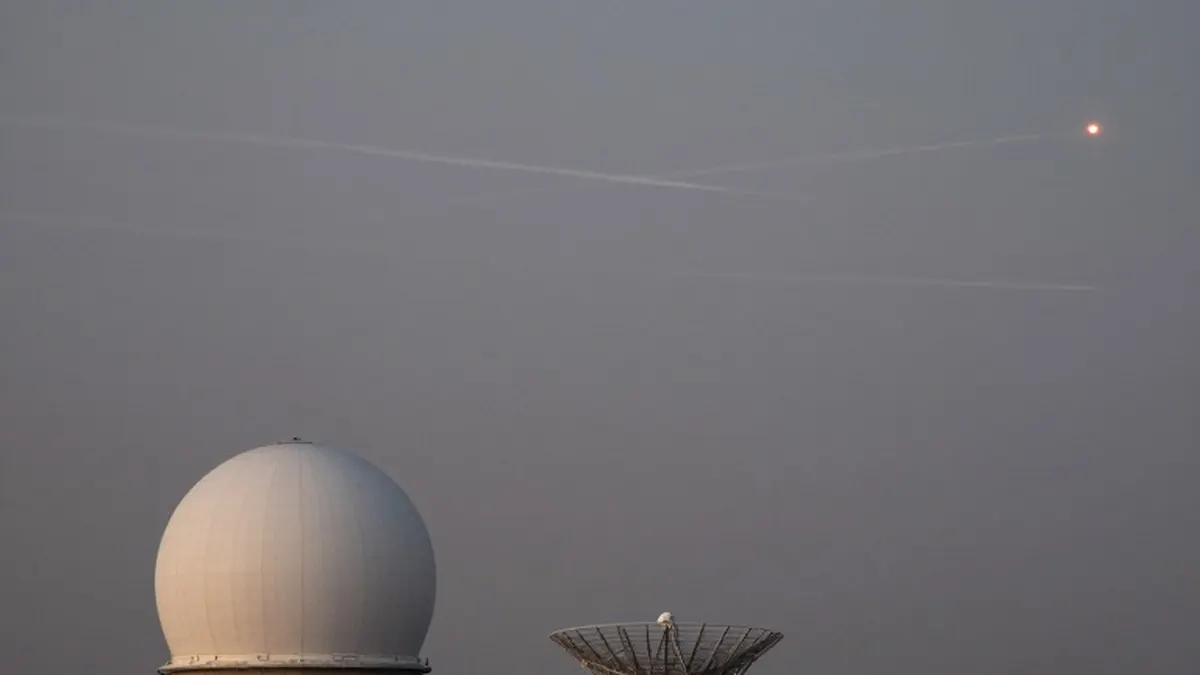
Iran's Islamic Revolutionary Guard Corps said it launched six drones at a US air defence radar system at Bahrain's Riffa Air Base on Sunday, describing the strike as a response to what it called hostile American actions.
Sirens sounded across Bahrain as the Ministry of Interior urged residents to "remain calm" and "proceed to the nearest safe location". The ministry issued two alerts within about three hours, the first at about 4:30am (01:30 GMT), warning of a "potential threat" without elaborating.
The Bahrain Defence Force said its air defence systems thwarted several Iranian "aerial attacks" targeting the kingdom. The US military has not commented on Sunday's claim.
It was the second time in three days that the IRGC claimed an attack on a US radar in Bahrain. On Friday, the Guard said it destroyed a US early-warning radar in retaliation for what it called an air attack on a telecommunications tower in southern Iran. US Central Command denied it, saying it shot down two Iranian drones with no injuries or damage. The IRGC, in a statement carried by the semiofficial Tasnim News Agency, called the operation a "serious warning" over alleged aerial provocations and oil smuggling in the Strait of Hormuz. Reuters reported it was Iran's first claimed attack on US military assets in a Gulf country since early September.
In its Sunday statement, the Guard said the Strait of Hormuz remained closed, claiming that US efforts to escort ships through the waterway had failed. It warned that any US attack would draw a more severe response. Tehran has told the UN Security Council it would respond immediately to renewed US or Israeli attacks and has accused Bahrain and other Gulf states of supporting US military operations. Bahrain has called for full implementation of Security Council Resolution 2817, which condemned Iranian attacks on Bahrain and other countries in the region and demanded they stop.
Manama is where the US Navy's Fifth Fleet is based. A Pentagon inspector general's report released in September found that Iranian attacks had damaged or destroyed buildings at US installations in eight countries, including Bahrain, in the first four months of the US-Israel war on Iran, which began on February 28.
Tensions have also risen at sea. The IRGC's navy said two oil tankers struck sea mines on Saturday while trying to pass through the strait, adding that the vessels had switched off their navigation and tracking systems and were using an "unauthorised" route, according to the state news agency IRNA. Two other tankers turned back towards the Gulf after warnings, it said. Al Jazeera's Mohammed Vall, reporting from Tehran, said there were "two similar incidents yesterday" and that the number of tankers hitting mines has increased. Iran claims the strait is under its "full control" and that "only Iran and Oman have the right to control it", a claim the United States rejects. Tehran blamed the incidents on tanker owners and their backers, saying they had failed to comply with Iran's passage regulations.
Diplomatic efforts to stop the attacks and reopen the strait remain stalled. Iran's parliamentary speaker and chief negotiator, Mohammad Bagher Ghalibaf, told Al Jazeera last week that Tehran wanted to move beyond a state of "no war, no peace". He said Iran had conveyed seven conditions for a deal through a Qatari mediator and was awaiting an official US response, including lifting the US naval blockade and sanctions, releasing frozen Iranian funds, ending hostilities on all fronts and formally declaring the war over. President Donald Trump's administration has meanwhile tightened sanctions and maintained the blockade on Iranian ports.
Saeid Golkar, the UC Foundation associate professor of political science at the University of Tennessee at Chattanooga, told Al Jazeera that limited exchanges could escalate into a wider war. "Both sides may prefer to avoid a full-scale war, but the danger lies in miscalculation," Golkar said, warning that such exchanges could eventually lead to a broader conflict that neither side initially intended.
Originally published by News Media House