U.S. Forces Down Two Drones Over Bahrain as Iran Claims Radar Strike
The U.S. military reports no damage to facilities, while Tehran links the attack to a recent strike on a port in Sirik.
By Rebecca Lewis ·
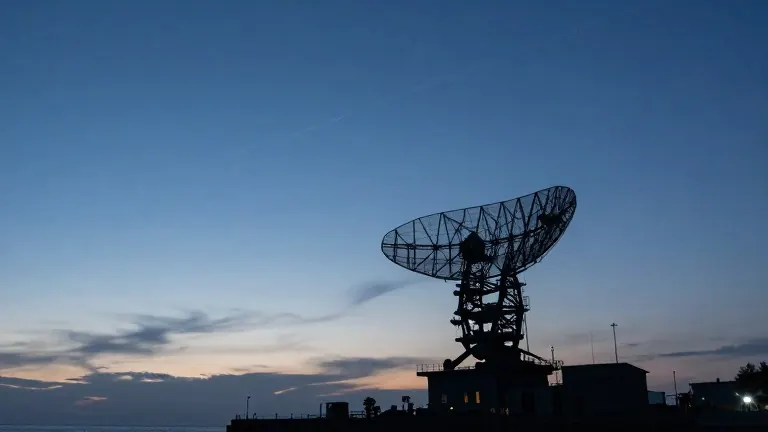
Tensions in the Gulf escalated on Friday as the U.S. military intercepted two Iranian attack drones heading toward Bahrain. The engagement occurred the same day Iran’s Revolutionary Guard announced a strike on a U.S. early warning radar system within the kingdom. These developments mark a notable shift in the conflict that began in February.
U.S. Central Command, or CENTCOM, confirmed the shootdown of the two drones. The command stated that the incident resulted in no injuries or damage to U.S. facilities. This official account stands in contrast to the claims made by Iranian military leaders regarding the effectiveness of their recent offensive.
Iran’s state-run IRNA news agency cited a statement from the Revolutionary Guard. The statement asserted that the radar strike was a direct response to a U.S. attack on a telecommunications pole in the southern Iranian port of Sirik. This incident represents the first time Iran has targeted a facility in Bahrain since September.
Since the start of the air war, Iran has frequently targeted U.S. military bases in neighboring Arab nations. Tehran has also focused on shipping, routinely targeting oil tankers in the Strait of Hormuz. The waterway serves as a critical route for international oil shipments, making it a focal point of the ongoing regional conflict.
Bahrain’s Ministry of Information did not immediately respond to requests for comment regarding the drone interception or the claimed radar strike. The lack of a local response leaves the specific nature of the damage, if any, to the radar system unconfirmed by the host nation.
In a related maritime incident, the Revolutionary Guard said a liquefied petroleum gas tanker struck a mine in the Strait of Hormuz. The vessel allegedly ignored repeated warnings while transiting the eastern part of the strait. The explosion caused by the mine strike could not be independently verified by outside observers.
The military exchanges coincide with diplomatic friction over nuclear monitoring. Iran told the United Nations’ nuclear watchdog that inspections cannot proceed while the country faces military threats. According to a confidential report from the International Atomic Energy Agency, Tehran refuses to give inspectors access to sites affected by strikes during the June 2025 war.