Rubio's Mumbai and Jamnagar Stops Reveal a Deal-Driven US Approach to India
A Carnegie Endowment analyst says the secretary of state's itinerary reflects Washington's transactional foreign policy, even as India-US ties show quiet resilience alongside real strains.
By News Media House Staff ·
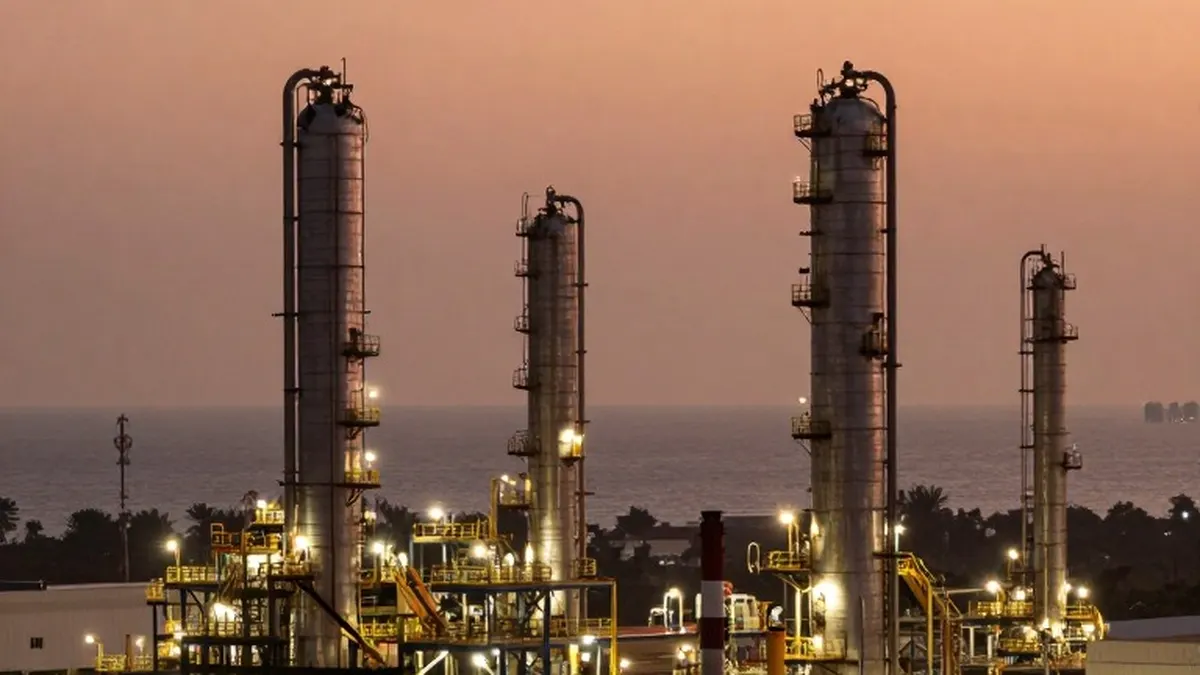
US Secretary of State Marco Rubio made his second trip to India this year last week, and the route he chose drew as much attention as the people he met. He skipped New Delhi and did not see Prime Minister Narendra Modi. Instead he went to Mumbai, India's financial capital, where he held talks with Foreign Minister Subrahmanyam Jaishankar and business leaders, and then to Jamnagar, the Gujarati town that hosts the huge oil refinery complex run by Reliance Industries.
The visit came just five months after Rubio's first trip as secretary of state. That is notable because relations between the two countries have been strained during Donald Trump's second term, mainly over tariffs and India's purchases of Russian oil. The quick return suggests India still serves the president's aims.
Milan Vaishnav, director of the South Asia Program at the Carnegie Endowment for International Peace, has followed India's global standing and its US ties for a decade. He describes the current period as an "unbound" era in bilateral relations and cautions that nobody can claim to know exactly how events fit together. In his words, anyone who says otherwise is "lying to you".
Vaishnav considered the pre-trip commentary about the itinerary overblown, noting that not every bilateral meeting has to take place in a capital. He still believes the venues were chosen deliberately. The administration, and Trump in particular, views foreign policy as deal-making, and Mumbai is a natural place to pursue business agreements.
The Jamnagar stop, where Rubio met Reliance chair Mukesh Ambani, also carried a domestic message. Petrol prices in the United States are very high and could become a major issue in the 3 November midterm elections. India consumes a lot of oil but also exports large volumes of refined products. Vaishnav said one of Rubio's goals was to encourage Reliance, and by extension India, to process more Venezuelan crude.
Vaishnav described the Trump administration's embrace of Pakistan after the May 2025 conflict with India as the biggest plot twist. Pakistan's standing in Washington had declined over the years, and Joe Biden left office without making a presidential call to his Pakistani counterpart. Trump later thanked Pakistan for helping capture a suspect tied to a 2021 bombing in Afghanistan that killed 13 US service members. In June he welcomed Pakistan's army chief, Asim Munir, to the White House after Munir urged that Trump be nominated for the Nobel peace prize. Vaishnav attributes the shift to Trump's strongman envy, Pakistan's savvy diplomacy and possible energy and crypto deals involving the president's inner circle. For New Delhi, he says, Modi's personal rapport with Trump offers no guarantee against a sudden reversal.
Carnegie colleague Sameer Lalwani has argued that the relationship is sturdier than the rhetoric implies. Bilateral trade hit a record in 2025, US technology companies have pledged nearly $68bn for AI infrastructure in India, and the two countries have held a record number of joint military exercises this year.
Even so, Vaishnav sees three reasons for caution. Trump imposed a 50% tariff on India in 2025, later cut to 18% this year without a comprehensive trade deal. H-1B visa and green card restrictions have hit Indian workers in Silicon Valley disproportionately, creating what he calls a "real trust deficit". Earlier this month New Delhi called remarks by Vice-President JD Vance about Indian professionals "deeply offensive". Political friction also matters: in January, Commerce Secretary Howard Lutnick blamed the lack of a trade deal on Modi not phoning Trump, a claim New Delhi has disputed.
Vaishnav added that much of today's progress stems from decisions taken years ago, and turbulence could make new initiatives harder. He argued that India's most important investment is political, keeping its democracy robust and inclusive, alongside reforms such as faster dispute resolution, an impartial legal system, even-handed tax enforcement and regulatory certainty. Neither side can treat the other as expendable, and the test is whether the strategic foundations hold amid global upheaval.
Originally published by News Media House · Source: The Guardian