SpaceX to test Starship orbit today, setting up potential Falcon 9 retirement
A successful test flight today could accelerate the end of the Falcon 9, leaving NASA to find new ways to send astronauts to the space station as early as 2028.
By Jack Thompson ·
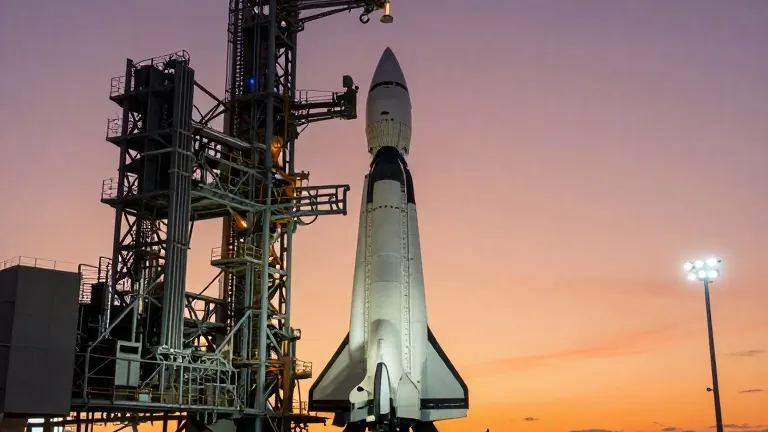
SpaceX will attempt a full orbital flight of its Starship rocket later today from its launch pad in South Texas. The mission, if successful, will see the vehicle circle the Earth and return to land vertically at the same location approximately 22.5 hours after liftoff. This test marks the most ambitious validation yet of the massive spacecraft, which Elon Musk says is intended to carry humans to Mars in the future.
The rapid development of Starship threatens to sideline the company's older Falcon 9 rocket. SpaceX has indicated it will stop flying the Falcon 9 to free up engineering and production resources for its larger vehicle. This shift creates a logistical problem for NASA, which relies on the Falcon 9 to launch the Dragon capsule. The Dragon is currently the only American spacecraft capable of transporting astronauts to and from the International Space Station.
NASA contracted with SpaceX in September for three additional crewed missions to the station. These flights would keep the Dragon in service through 2028, assuming the missions occur consecutively every six months. The space station is scheduled for retirement in 2030, leaving a narrow window for the agency to secure alternative transport before the Falcon 9 disappears from the market.
Caleb Henry, director of research at Quilty Space, noted that the Dragon has become the default method for getting astronauts to orbit due to its reliability. However, the commercial market for human spaceflight is currently small. Henry stated that building capsules is expensive and time-consuming, and NASA is the primary customer willing to pay for the service.
SpaceX's financial priorities have shifted away from government contracts. The company generated approximately $2.1 billion in revenue from space launches through September of this year. By comparison, its Starlink satellite internet service brought in about $12.8 billion, and its AI business generated roughly $10.9 billion. Elon Musk said in a post on X that once Starship flies reliably multiple times per week, SpaceX will shift resources to it to achieve launch rates of several times per day.
Gwynne Shotwell, SpaceX president, compared the Falcon 9 to a minivan at the All In summit in September. She argued that the company is moving from older to newer technology, noting that a six-month trip to Mars does not require a minivan. Shotwell suggested that Boeing, which has developed the Starliner capsule, could take on more station traffic. She noted that Boeing has been paid significantly to develop its vehicle and should use it.
The Starliner has faced technical issues, including a mission in 2024 where a planned eight-day stay turned into a nine-month delay before astronauts returned on a SpaceX vehicle. A crewed Starliner flight is currently targeted for 2028. Tim Farrar of TMF associates said that while SpaceX's decision makes business sense, the agency that kept the company afloat in 2008 deserves more loyalty. The U.S. Space Force said it has secured Falcon 9 launches through 2028 and is confident other suppliers can fill the gap.
An analysis by Quilty Space estimates the commercial launch market could be short by 150 flights between now and 2030. The Pentagon has reportedly been seeking alternative rides for national security satellites. SpaceX did not respond to a request for comment regarding a specific timeline for retiring the Falcon 9.